
.jpeg)
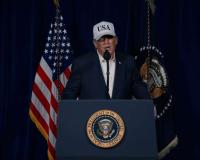
During a briefing at the White House, the Staff Secretary outlined the President’s vision for a trade landscape where the U.S. no longer merely facilitates tech exchanges but ensures significant domestic returns on every transaction. President Trump, addressing the specifics of the semiconductor market, emphasized that while the chips slated for export may not always represent the absolute pinnacle of high-end hardware, their necessity to foreign industries—specifically in China—creates a unique opening for the American economy.
"They are going to sell chips," the President stated, referring to the ongoing demand from international partners and competitors alike. He noted that because nations like China and several others remain heavily reliant on these components for their industrial and consumer sectors, the United States has positioned itself to extract a premium. Under the new executive framework, the administration is targeting a 25% profit margin on these sales, a figure the President highlighted as a testament to the renewed focus on "America First" fiscal results.
The administration’s approach appears to treat semiconductor exports as a critical tool of economic statecraft. By formalizing a 25% profit threshold, the executive actions move beyond traditional tariffs, instead focusing on the direct bottom-line benefits of U.S.-led tech distribution. This strategy is expected to have immediate ripples across global supply chains, as manufacturers and international buyers adjust to the formalized pricing structures dictated by the White House.
This development underscores a broader administrative philosophy that treats technological exports as a high-yield national asset. As the world watches the implementation of these two executive orders, the focus remains on how these mandates will reshape the U.S. relationship with the global tech market. By prioritizing high-margin returns on essential hardware, the Trump administration is effectively betting that the world’s dependence on these chips is strong enough to sustain a more expensive, yet lucrative, era of American trade.
About The Author

.jpeg)
.jpeg)







Comment List